
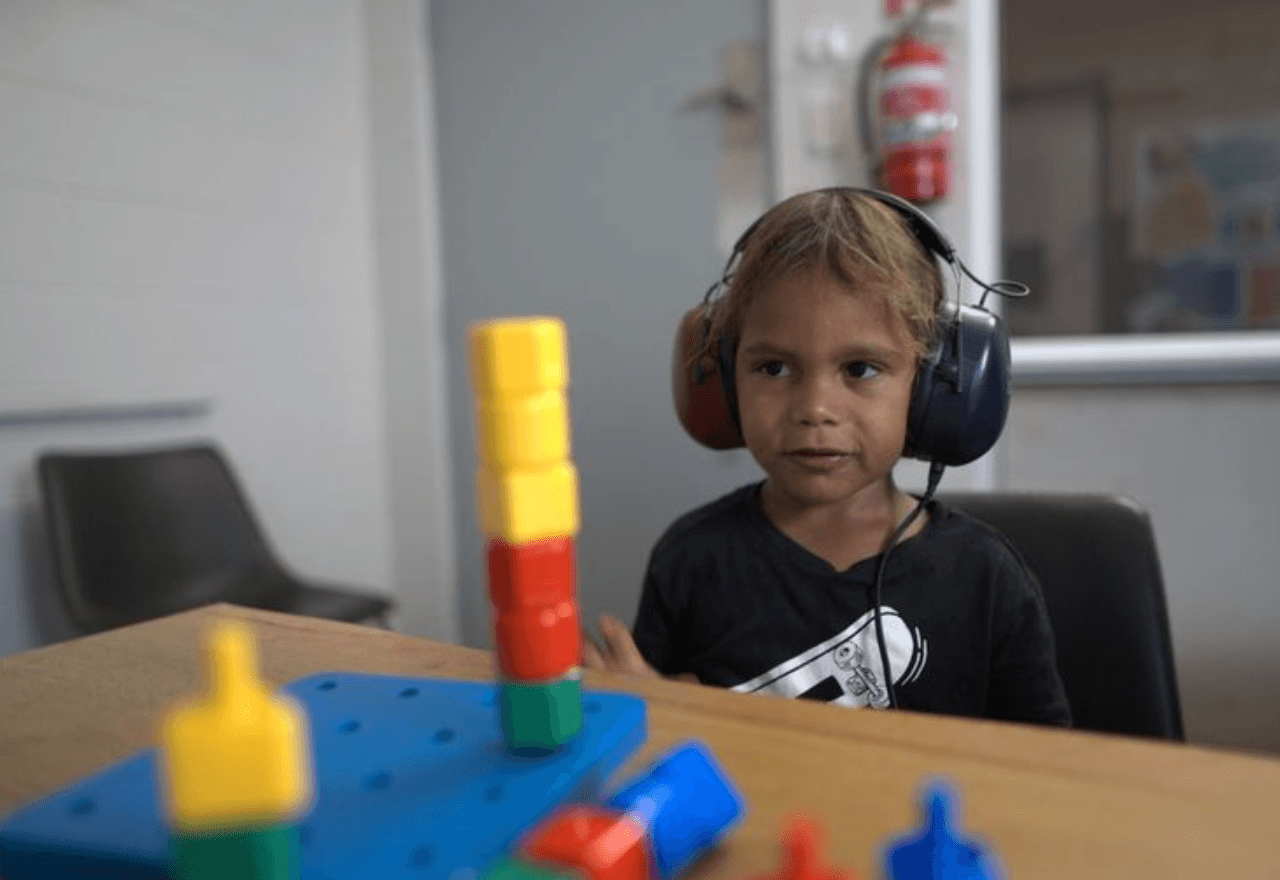
In remote and very remote areas, like many of the towns across the Western Plains, half of all First Nations children aged under 6 years are likely to have middle ear disease. This is more than twice the rate of Indigenous children in metro and other rural areas.
Released during NAIDOC Week, the findings come from Hearing Australia after they analysed hearing assessments of more than 15,000 First Nations children. Hearing Australia are flying the flag on this persistent problem which can leave four in ten First Nations children aged 7-14 in remote areas with measured hearing loss and a lifelong battle to keep up.
Local Aboriginal Medical Services are well aware of the challenge and have been working to make an impact in early detection and treatment to prevent hearing loss.
Anne-Marie Banfield, a Kaurna woman from South Australia, is First Nations Strategy and Relationship Lead at Hearing Australia. "I've been working in ATSI eye and ear health for over thirty years, from the local level to the state level," she said. "We are making progress but there's still significant work needed for people in remote and very remote areas."
"Raising awareness is critical and being able to be flexible is key to this work," Ms Banfield says. "Flexibility can include things like telehealth or going out and visiting mob where they're at. Often it means working with an Aboriginal Community Controlled Health Organisation like an AMS so that it's a safe place for people."
She says a lot of work has been done in co-designing services that deliver culturally sound support but that hearing is one of the areas where Australia is lagging behind the Closing the Gap targets.
In Coonamble, the Aboriginal Medical Service (AMS) does regular routine ear checks. "Our clinical priority is keeping children 'pus-free from birth to three'," said Dr Samuel Sung. "We do opportunistic ear checks at every routine contact and illness visit from birth to catch fluid and infection before it causes permanent damage."
Ms Banfield says that ear disease is particularly difficult for families to detect. "Often ear disease doesn't present with any obvious symptoms so parents or carers aren't aware it's happening. Mostly it's when someone notices a slight speech delay or a few behavioural problems. The earlier they are investigated the better," she said. "It's 100 per cent imperative to get early intervention."
For younger children it can be even harder to detect. "It's really important for mob under two years of age to have a hearing check every six months and if there's any concerns before that please make an appointment because sometimes the hearing loss can come and go."
Her advice to First Nations adults is to trust their instincts. "Don't second guess yourself and worry that you might be wrong. Make an appointment and get an assessment because the quicker its treated the better the outcomes they have."
Dr Sung says there is more that can be done outside the clinic. "Broader action on environmental drivers like overcrowded housing and passive smoke, alongside more education for our community so families can pick up infections early before complications develop."




Comments
No comments yet
Be the first to share your thoughts and start the conversation!